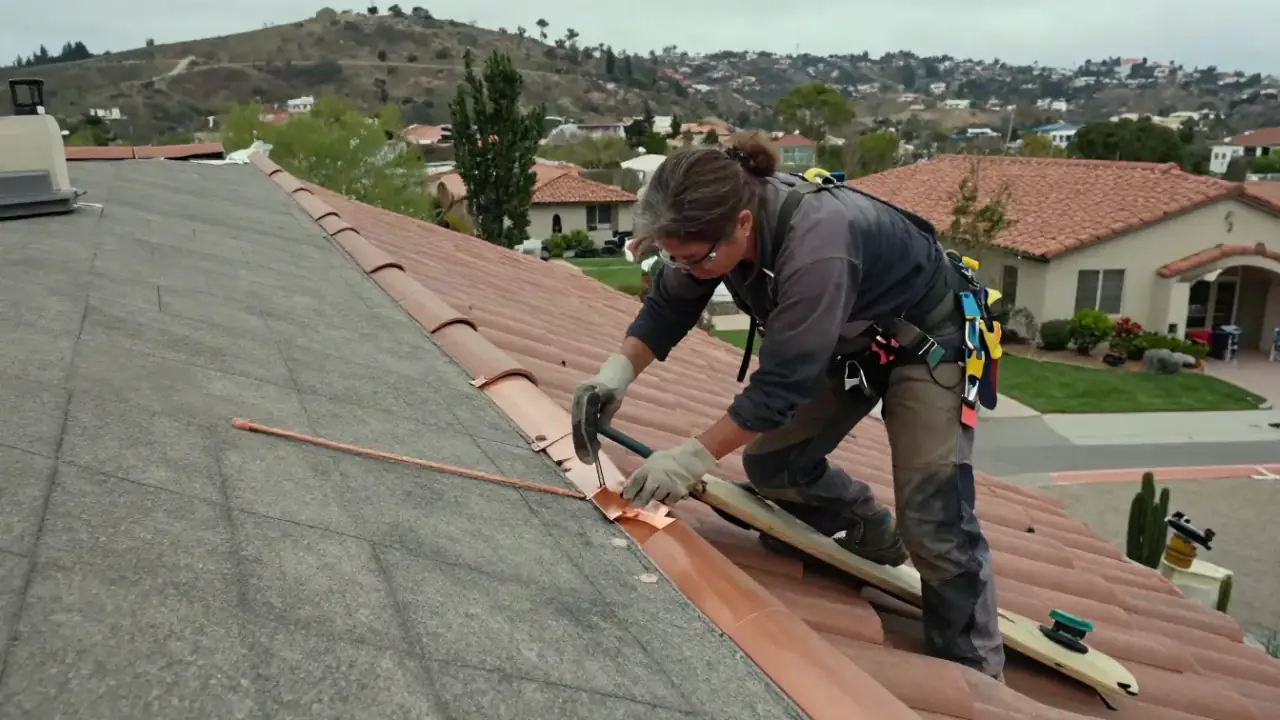
Flashing & Valley Repair
Tile Roof Flashing Repair Laguna Niguel CA done right the first time
Tile Roof Flashing Repair Laguna Niguel CA is what you call when water stains spread across a ceiling after a storm. We pull the failed flashing, inspect the valley, and rebuild the water path so rain runs off the way it should. Whether you own in Beacon Hill or near Crown Valley, we handle tile roof flashing replacement and valley flashing repair Laguna Niguel homeowners actually need.
Service overview
What Tile Roof Flashing Repair Laguna Niguel CA involves
Tile Roof Flashing Repair Laguna Niguel CA is the trade of rebuilding the metal and membrane details that keep water out of the joints where roof planes meet. Flashing is the galvanized or copper strip that seals a wall, chimney, or skylight to the tile field. A valley is the V-shaped channel where two slopes drain into each other. Both take the heaviest water load on any tile roof, and both fail long before the tile itself does.
In Laguna Niguel, most of our flashing calls start the same way: a brown ring on the ceiling, a drip in the garage, or grit washing out of a valley after a Santa Ana wind event. Clay and concrete tiles shed water for decades, but the underlayment and flashing underneath do not. If you have been searching tile roof flashing repair near me Laguna Niguel, the fix is usually a targeted flashing and valley repair Laguna Niguel CA job, not a full re-roof.
Practical benefits
Why homeowners call us for flashing work
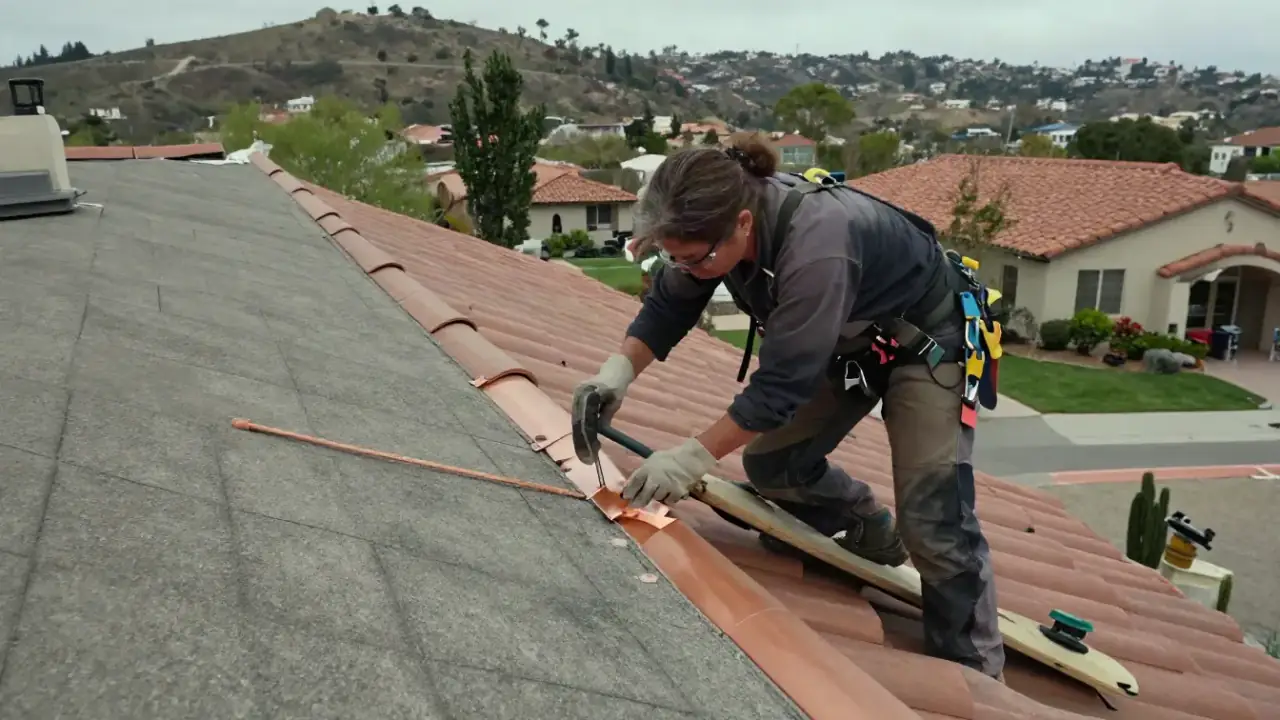
Flashing and valley failures are the number one source of tile roof leaks we see in Orange County. Fixing them early protects the deck, the insulation, and the ceiling drywall underneath.
Stop leaks at the source
Water almost never enters through the tile. It enters at a lifted flashing edge, a rusted valley pan, or a cracked mortar joint. We trace the path with a moisture meter and repair the actual entry point, so you are not paying twice for the same leak.
Protect the underlayment
Once flashing fails, water sheets under the tile and rots the roofing underlayment. Catching it early keeps a $400 flashing repair from turning into a $9,000 underlayment replacement. We check the felt or membrane while the flashing is open and tell you exactly what shape it is in.
Match your existing tile
We stock and source Boral, Eagle Roofing, Marley, Westile, and US Tile profiles common on Laguna Niguel roofs. When tiles have to come up to reach the valley, we reinstall the originals where they survive and match the rest, so the roof still reads as one field from the street.
Built for coastal weather
Salt air, marine layer, and summer heat cycles eat flashing faster here than inland. We use corrosion-rated metal, proper fasteners, and code-correct laps so the repair holds through wet winters and dry, windy Octobers alike. Most flashing repairs carry a workmanship warranty.
How service works
How our flashing and valley repair process works
Every job follows the same five steps, whether it is a single chimney flashing leak in Niguel Woods or a full valley rebuild in Ocean Ranch. You get a clear scope before we start and a walkthrough when we finish.
STEP 01
Inspect and trace
We walk the roof with a moisture meter, check the attic side if access allows, and photograph every suspect joint. You see the pictures before we quote. This usually takes 45 to 60 minutes on a standard Laguna Niguel home.
Tools and methods
Tools and methods we use on tile roofs
Tile pry bar
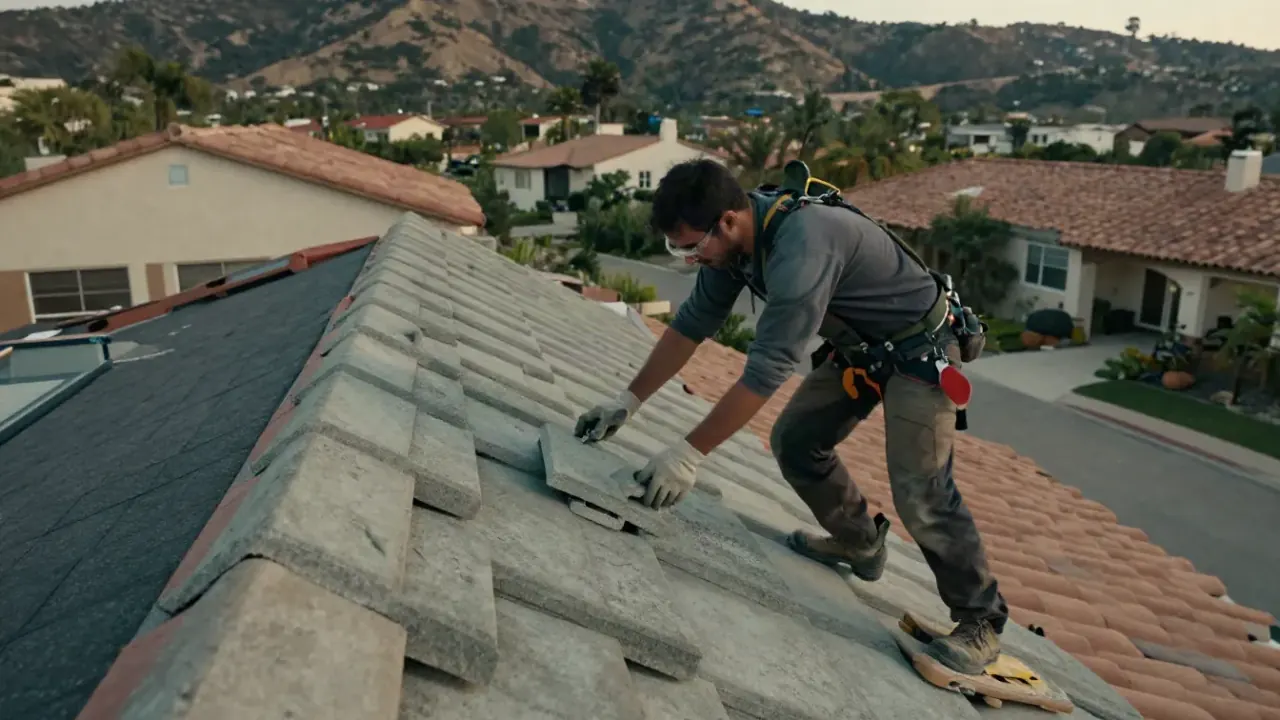
Lifts clay and concrete tile without cracking the pans. The right bar spreads the load across the tile, which is why we lose so few pieces during a valley or flashing repair.
Roofing hammer and roofing nailer
Sets flashing and resets tile with correct fasteners. The nailer speeds up large resets while keeping nail depth consistent, which matters on tile where overdriving cracks the field.
Angle grinder and tile cutter
Cuts and shapes replacement tile to fit around flashing, valleys, and penetrations. Matching a Boral or Eagle profile to an existing field usually takes a clean cut, not a break.
Moisture meter
Confirms the leak path inside the roof assembly. We read the deck and framing before and after the repair so we know the source is closed, not just the visible symptom.
Magnetic sweeper
Picks up stray nails and metal shavings from the yard, driveway, and planters after every job. It is the last thing we run before we leave, and it is why you will not find a nail in your tire.
Safety harness and ladder stabilizer
Keeps our crew safe on steep Laguna Niguel roof pitches and keeps the ladder from shifting on stucco or driveway surfaces. OSHA-compliant fall protection is standard on every job.
Tile Roofing Institute (TRI) flashing standards
We install flashing with the laps, clearances, and fastening patterns TRI calls for on tile roofs. That means water is directed over the flashing, not behind it, and the detail performs the way the manufacturer intended.
Layered valley membrane systems
On closed valleys, we build a layered membrane system matched to the roof pitch. Each layer laps the one below, so even if the top surface wears, water still has to travel uphill to get inside. It is the same approach TRI recommends for tile.
Water testing before close-out
Where the geometry allows, we run water over the repaired flashing or valley before we call the job done. If it weeps, we find out on our time, not during your next storm at 2 a.m. Every repair gets this check when possible.
Photo documentation
We photograph the failed detail, the repair in progress, and the finished work. You get the images, which is useful for your records, for insurance, and for showing a buyer's inspector exactly what was done and when.
Where this service fits
When to call for flashing and valley repair
A storm just passed and there is a new water stain on the ceiling in your Rancho Niguel home.
We treat active leaks as priority calls. A technician comes out, finds the entry point, and either repairs it on the spot or tarps it to stop the damage until the full repair can be scheduled. You get photos of what we found. The leak stops, the ceiling stops spreading, and you have a clear scope and price for the permanent repair.
You are selling your house and the buyer's inspector flagged rusted valley flashing.
We inspect the flagged area, document the condition with photos, and quote the repair in writing. If the flashing is cosmetic and still sound, we will say so. If it is failing, we repair it before closing so the sale does not stall. A documented repair with photos and a warranty, ready for the buyer and their agent.
Your roof is 18 years old and you have patched the same chimney flashing three times.
We open the detail and look at the whole assembly, not just the visible sealant. If the step flashing and underlayment are both done, we quote the correct fix. If the rest of the roof is close behind, we walk you through re-roofing options too. One proper repair instead of a fourth patch, plus an honest read on how much life the rest of the roof has left.
You noticed loose ridge tiles and a valley that holds water after a Santa Ana wind event.
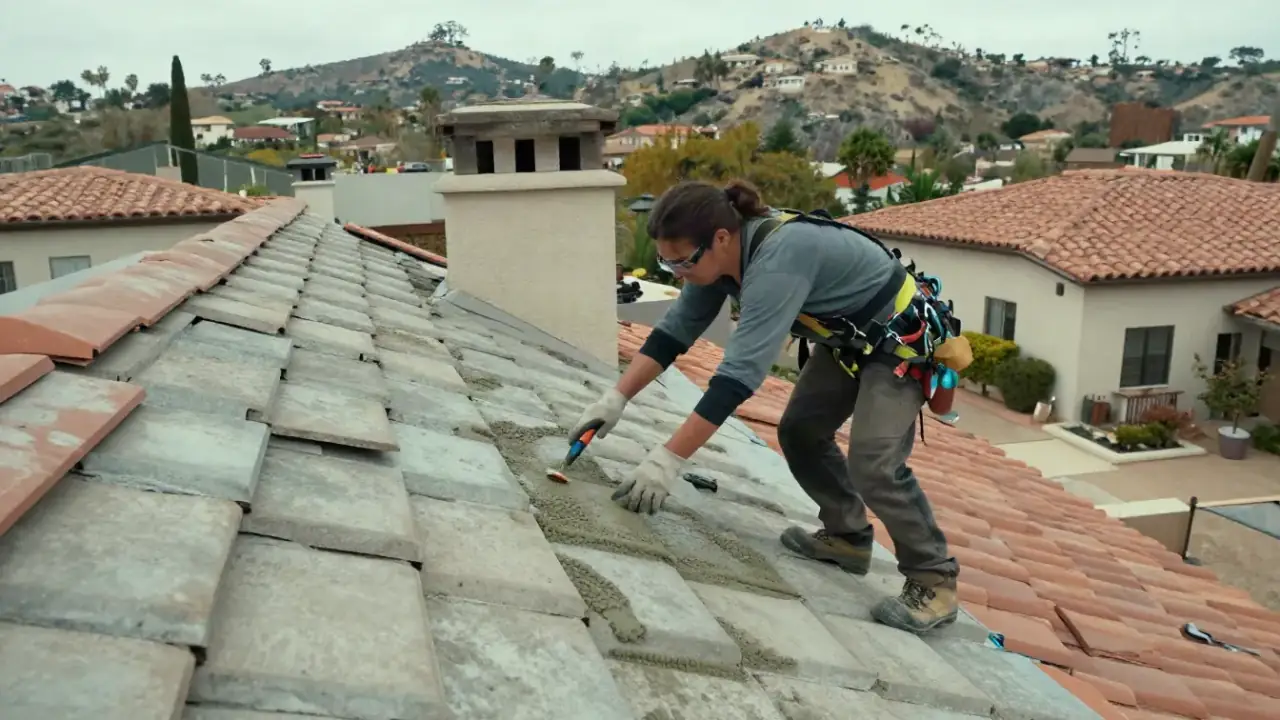
We re-secure the ridge and hip tiles with mortar and roofing foam, clear the valley, and check the flashing at every penetration nearby. Wind events expose weak details, so we inspect the whole upper roof while we are up there. A tightened roof that handles the next wind event without losing tile or leaking at the ridge line.
Local execution
How flashing repair runs in Laguna Niguel
Laguna Niguel sits close enough to the coast that salt air and marine layer accelerate corrosion on flashing metal, especially on west-facing slopes. The inland heat cycles do the rest, expanding and contracting metal until laps open and sealant cracks. Most of the housing stock here was built with clay or concrete tile over felt underlayment, and that underlayment is now reaching the end of its service life on many roofs. When we open a valley for flashing repair, we check the underlayment condition and tell you honestly whether a localized fix will hold or whether the slope is due. Roof valley repair for tile roofs in Laguna Niguel, California is rarely a same-day emergency, but it should never wait past the first ceiling stain. We work with the city's permit requirements and follow California Building Code for flashing details, and we schedule around the fall and winter rain window so repairs are closed before the first real storm. If you are in 92677 or 92607 and want a straight answer on your roof, call (949) 670-0283.
Beacon Hill
Many homes here have steep west-facing slopes that catch afternoon sun and marine air. Flashing on those elevations corrodes faster, so we check them first on any leak call.
Ocean Ranch
Larger tile roofs with multiple valleys and complex hips. More valley footage means more joints to fail, so we map every valley on the inspection before quoting.
Marina Hills
A mix of tile profiles and ages. We keep common Boral and Eagle profiles on the truck because matching tile here often means replacing a piece or two during the repair.
Crown Valley Highlands
Older tile roofs where underlayment is often the hidden issue behind a flashing leak. We check it every time we open a valley or sidewall detail.
Niguel Woods
Tree cover drops debris into valleys and gutters, which traps moisture against flashing. Cleaning the valley is part of the repair here, not an upsell.
Coastal salt air and marine layer
Speeds up corrosion on flashing metal and fasteners. We use corrosion-rated materials on Laguna Niguel roofs rather than standard builder-grade steel, which adds years to the repair.
Santa Ana wind events
Lift and loosen ridge tiles and drive debris into valleys. After a wind event we see a spike in flashing and valley calls, and we prioritize active leaks.
Hot, dry summers followed by winter rain
Thermal cycling opens laps and cracks sealant. The first big rain of the season is when most flashing leaks show up, which is why fall is the best time to inspect.
Aging felt underlayment under original tile
On roofs from the 1980s and 1990s, the underlayment is often failing behind the flashing. We check it whenever we open a detail and quote replacement if the section is compromised.
Problems we solve
Flashing and valley problems we fix in Laguna Niguel
Most tile roof leaks trace back to one of these failures. If you recognize your situation, call (949) 670-0283 and we will confirm it on the roof.
Ceiling stains that appear after every rain
We trace the stain back to the entry point, usually a valley or sidewall flashing, rebuild that detail, and water-test it. Most ceiling-stain leaks we fix in Laguna Niguel trace to one failed joint, not a whole failing roof. Water is already past the flashing and underlayment, soaking insulation and drywall. Left alone, it spreads, rots the deck, and invites mold into the attic.
Rust streaks running down the tile from a valley
We replace the corroded metal with corrosion-rated flashing, clear the valley of debris, and reset the tile. Coastal salt air speeds this up, so we use materials rated for the environment rather than builder-grade steel. Rust means the valley pan or flashing metal is corroding through. It will pinhole and leak within a season or two, usually right over a living space.
Chimney or skylight flashing that keeps leaking after patching
We pull the tile, remove the old flashing, and rebuild the detail properly with new metal, correct laps, and fresh sealant. Then we water-test the assembly before closing it up, so you know it is fixed before the next storm. Repeated caulk patches hide the real problem: failed step flashing or a broken curb detail. Each patch buys weeks, not years, and the leak keeps damaging the framing.
Grit and granules washing out of a valley
We open the valley, inspect the underlayment, and replace the failed section if it is localized. If the whole slope is shot, we tell you straight and quote a re-roof instead of selling you a repair that will not hold. That grit is underlayment breaking down. Once it is gone, water runs straight to the deck and into the house. This is the point where a small flashing repair can turn into a full underlayment replacement.
A practical standard for every visit.
Clear planningPrepared arrivalsCareful workLocal follow-through
Experience in the details
Local flashing and valley experience
Our crew works tile roofs every week in Laguna Niguel and the surrounding Orange County cities. We hold a California Contractor License (C-39 Roofing), carry OSHA Safety Certification for roof work, and follow Tile Roofing Institute (TRI) installation standards on every valley and flashing detail. We are also EPA Lead-Safe certified for older homes and carry full workers' compensation and general liability coverage. That means the person on your roof knows how a Boral or Eagle tile profile locks together, how much lap a valley pan needs at a 5:12 pitch, and how to lift tile without cracking it.
- California Contractor License (C-39 Roofing) held and current
- OSHA Safety Certification for fall protection and roof work
- Tile Roofing Institute (TRI) methods used on every valley rebuild
- EPA Lead-Safe Certification for pre-1978 homes
- Manufacturer certifications with Boral and Eagle Roofing systems
Where we work
One local team. A lot of ground covered.
Crown Valley HighlandsNiguel SummitNiguel HillsNiguel WoodsOcean RanchBear Brand RanchBeacon HillCrest de VilleKite HillMarina HillsMonarch PointRancho Niguel
Check my address Notes from local customers
What Laguna Niguel homeowners say
We had a stain spreading across the ceiling every time it rained. Two other companies wanted to re-roof the whole slope. This crew found the failed valley flashing in about twenty minutes, showed me the photos, and rebuilt the valley pan for a fraction of the re-roof quote. Three storms later, still dry.
Our chimney flashing had been patched twice by a handyman and kept leaking. They pulled the tile, replaced the step flashing properly, reset the tile, and even matched two cracked pieces I had been staring at for years. Clean work, fair price, and they cleaned every nail off the driveway.
Called on a Friday with water coming into the garage during a storm. They had someone out the same afternoon to tarp and stop the leak, then came back Monday to do the flashing repair. Honest about what needed fixing now versus what could wait. That is rare.
Most flashing repairs run $350 to $1,200 in 2026, depending on access, tile type, and how much tile has to come up. A simple pipe boot or sidewall reseal sits at the low end. A chimney flashing rebuild or a full valley pan replacement lands higher. We quote the exact scope after inspection, before any work starts.
The three most common causes we find are rusted or corroded flashing metal, failed sealant at laps and penetrations, and underlayment breakdown behind the flashing. Coastal salt air speeds up corrosion, and years of heat cycling open up the laps. Once water gets behind the flashing, it runs under the tile and shows up as a ceiling stain far from the actual leak.
Yes, in most cases. We lift the valley tiles, rebuild the pan or membrane, and reset the original tile if it comes up clean. Tiles crack on removal maybe one in twenty times, and we keep matching Boral, Eagle, and US Tile stock on the truck for those. Full tile replacement is only needed when the field itself is already failing.
We do, and we cover all of Laguna Niguel plus Dana Point, Aliso Viejo, Laguna Hills, Mission Viejo, and Laguna Beach. Active leaks get priority, often same-day or next-day. Routine flashing work is usually scheduled within two to five days. Call (949) 670-0283 and we will give you a real window, not a vague one.
Keep exploring
Related Services
Your next step is waiting
Get Tile Roof Flashing Repair Laguna Niguel CA scheduled
If water is showing up on a ceiling, call (949) 670-0283. We are licensed, insured, and we carry a workmanship warranty on every flashing and valley repair. Active leaks get priority scheduling, including 24/7 emergency response across Laguna Niguel and Orange County.
Start with the basics
Get Your Roof Inspected
Call (949) 670-0283 or email us with your address and what you are seeing. We book inspections within the same week in most cases and confirm by text the day before. For active leaks or storm damage, we run 24/7 and usually have a crew on site within two hours inside Laguna Niguel.